Recycling and Sustainability at Redbridge Skip Hire
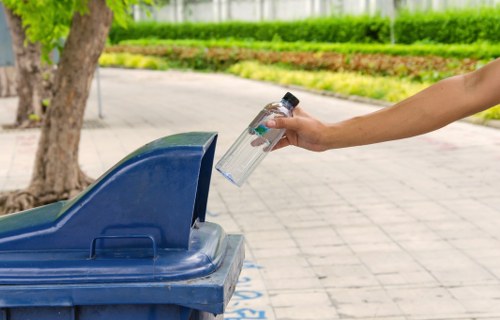
At Redbridge Skip Hire we focus on an eco-friendly waste disposal area and a practical, community-focused sustainable rubbish area. Our page explains how we turn skip hire into an opportunity for resource recovery, how our local partnerships support reuse, and how our operational choices reduce carbon impact across the borough. We describe measurable targets and everyday actions that keep waste out of landfill and help the borough meet its environmental goals.Our commitment includes a clear recycling percentage target: we aim to achieve a minimum of 70% material recovery from all collected loads by 2028. This target covers concrete, soil and hardcore, wood, metals, paper and cardboard, plastics, and other recoverable fractions. A high recovery rate underpins our approach to a cleaner, greener skip hire service and a credible sustainable waste management model for homes and construction sites alike.
 We work closely with local transfer stations and material recycling facilities (MRFs) across Redbridge and neighbouring boroughs. These transfer points are critical to efficient routing and sorting: they reduce double-handling, lower travel distances for collection vehicles, and increase the share of materials that are handed on for processing rather than disposal. Our network includes civic amenity sites and licensed transfer stations that accept segregated fractions and prepare them for recycling streams.
Local Partnerships and Community Reuse
Redbridge Skip Hire has formal partnerships with charities and social enterprises that accept reusable items from kerbside clearances and skip drops. Furniture, fixtures, working appliances, usable timber and textiles are offered to accredited charities, social projects and community workshops. These collaborations help divert items from landfill, support local social value, and create employment opportunities in repair and refurbishment.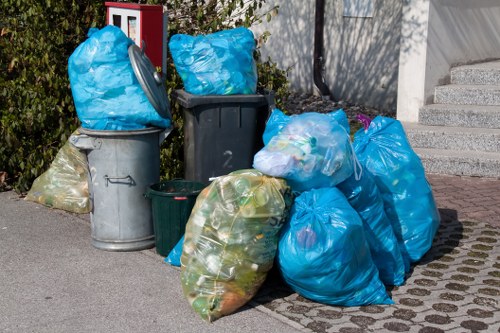 We integrate charity redistribution into our operational workflow: drivers are trained to identify reusable goods at point of collection and to log them for rapid transfer. Where appropriate, items go to community reuse centres or charity pop-up stores. This reduces waste handling needs, maximises re-use potential and ensures that perfectly serviceable goods gain a second life.
Our sustainable rubbish area approach follows the borough’s waste separation schemes: glass, paper & card, plastic pots and tubs, and food waste are separated at source where possible. For construction and demolition waste we operate segregated skips for wood, hardcore, metal, and plasterboard. The borough-led emphasis on pre-sort and source separation increases the quality of recovered material and improves recycling yield.
Low-Carbon Fleet and Responsible Operations
We are investing in low-carbon vans and smaller electric support vehicles for local collections and drop-offs. Our fleet strategy reduces emissions on short urban journeys and increases operational efficiency within the sustainable rubbish area model. Route optimisation, combined with lighter hybrid and electric vans for urban rounds, reduces fuel consumption and particulate emissions in dense residential zones.To support these investments we report fuel use, mileage and CO2 savings publicly and integrate those metrics into our recycling targets. Our drivers receive eco-driving training and we prioritise low-emission vehicles for heavy traffic periods. Using greener transport is part of our larger plan to reduce embodied carbon in waste management chains and create a low-impact skip hire service.
Practical recycling activity in the area includes:
- Kerbside source separation encouraged by the borough for food, glass, paper and mixed recycling;
- Construction site segregation into dedicated skips for timber, metal, plasterboard and hardcore;
- Textile and small electrical collection programmes run in partnership with local charities.
We also prioritise auditing and traceability. Each load is documented with transfer notes and destination records, so that recovery rates can be verified and continuously improved. Regular audits of local transfer stations and MRF partners ensure materials are handled to best practice standards and diverted to accredited processors, not to residual disposal where possible.
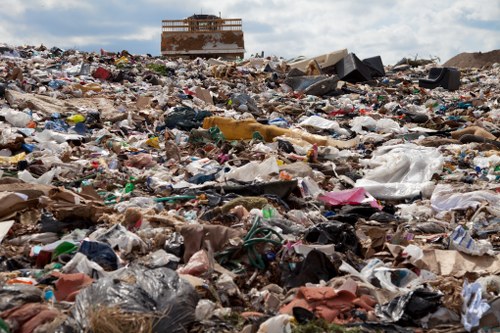 Community engagement is central: we run awareness activities with residents and small businesses on how to use segregation to boost recycling outcomes. Educational materials explain simple steps — separate glass and cans, keep contaminated waste out of dry recycling, and book segregated skips for bulky clear-outs — to improve the quality of materials entering recycling streams.
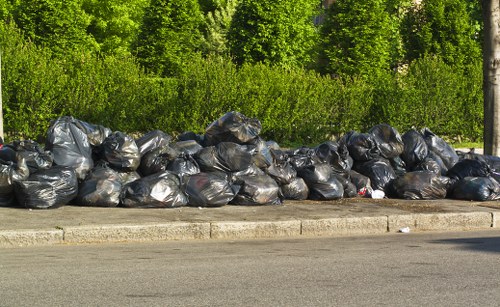 Choosing a sustainable rubbish area service means looking for transparent targets, charitable partnerships for reuse, and evidence of low-carbon operations. At Redbridge Skip Hire we combine a clear recycling percentage target, links to local transfer stations, charity partnerships to regenerate reusable goods, and an increasingly low-emission van fleet. Together, these measures help deliver an eco-friendly waste disposal area that supports the borough’s recycling ambitions and helps residents and businesses minimise environmental impact.